
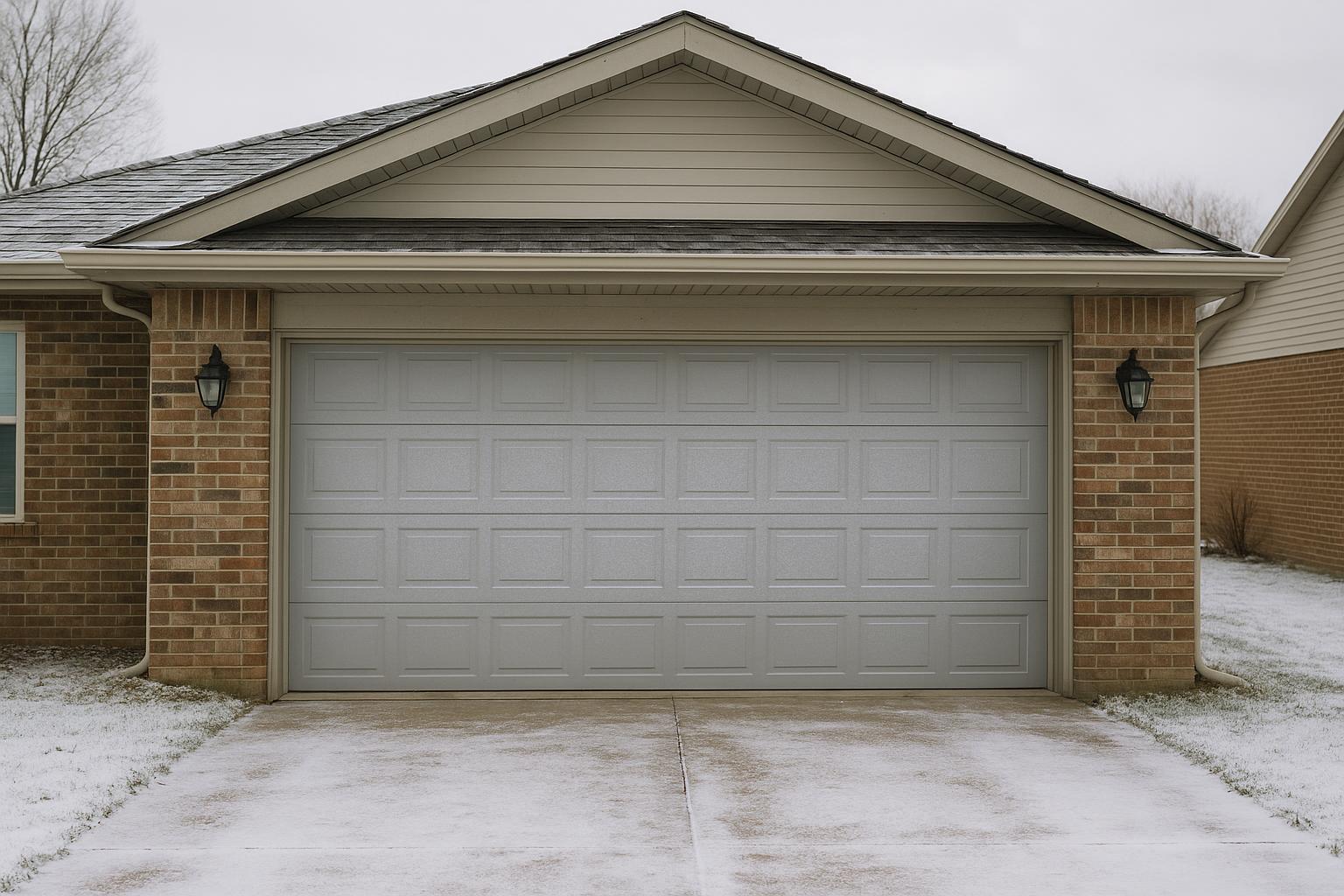
Winter Is Hard on Garage Doors — Here's What You Need to Know
If you've lived in Fishers for even one winter, you know how brutal the cold can get. Temperatures regularly drop below freezing from December through February, and those harsh conditions don't just affect your heating bill — they can wreak havoc on your garage door system.
Your garage door is the largest moving component of your home, and every part of it — from the springs and tracks to the opener and weatherstripping — reacts to cold temperatures. Understanding how winter weather impacts your garage door can help you avoid unexpected breakdowns on the coldest mornings of the year.
Cold Weather Makes Garage Door Springs More Brittle
Garage door springs are under enormous tension every single day. They're responsible for counterbalancing the full weight of your door, which can be anywhere from 130 to over 400 pounds depending on the material and size. In moderate temperatures, the metal in these springs flexes and contracts smoothly.
When temperatures drop significantly, however, the metal becomes less flexible. Cold steel is more brittle, which means your springs are more likely to snap during winter months. If you've ever heard a loud bang coming from your garage on a freezing morning, there's a good chance a spring just broke.
A broken spring isn't just inconvenient — it can be dangerous. The door becomes extremely heavy without the spring's counterbalance, and attempting to open or close it manually puts you at risk of injury. If a spring breaks, the safest thing to do is leave the door in place and call a professional for replacement.
What You Can Do
- Have your springs inspected before winter arrives. A technician can check for signs of wear, rust, or fatigue that make a cold-weather break more likely.
- If your springs are more than seven to ten years old, consider proactive replacement before they fail at the worst possible time.
- Apply a light lubricant designed for garage door components to keep the coils moving smoothly in cold conditions.
Opener Strain and Motor Issues in Freezing Temperatures
Your garage door opener works harder in the winter. Cold temperatures thicken the grease on tracks and hinges, increase friction throughout the system, and can even affect the viscosity of lubricants inside the motor housing. All of this means your opener has to exert more force to move the door.
For older openers or units that are already struggling, winter can push them past their limits. You might notice the door moving more slowly than usual, the motor straining or humming without fully opening the door, or the opener stopping mid-cycle because its force limits are being exceeded.
What You Can Do
- Lubricate all moving parts — hinges, rollers, tracks, and the drive mechanism — with a silicone-based or lithium-based spray before temperatures drop. Avoid WD-40, which isn't a true lubricant and can attract dust and debris.
- Check the force settings on your opener. If the door is struggling to open fully, the settings may need a slight adjustment. However, increasing the force too much can mask other problems, so it's best to have a technician evaluate the system.
- If your opener is more than 15 years old and showing signs of strain, winter is a good motivator to upgrade to a newer, more efficient model.
Weatherstripping Cracks and Fails in the Cold
The rubber weatherstripping along the bottom of your garage door and around the door frame is your first line of defense against cold air, moisture, snow, and pests. Over time, this rubber dries out and loses its flexibility — and cold weather accelerates that process dramatically.
Cracked or missing weatherstripping lets cold air pour into your garage, which affects the temperature of any rooms above or adjacent to the space. For homeowners in Fishers who use their garage as a workshop, gym, or storage area for temperature-sensitive items, this can be a real problem.
What You Can Do
- Inspect the bottom seal and side seals of your garage door at the start of each fall. Look for cracks, gaps, stiffness, or sections that have pulled away from the door.
- Replace worn weatherstripping promptly. It's one of the most affordable garage door maintenance tasks, and it makes a noticeable difference in energy efficiency.
- Consider upgrading to a threshold seal if water or snow tends to seep under your door during winter storms.
Metal Tracks Contract and Can Cause Alignment Problems
Metal expands in heat and contracts in cold — it's basic physics, but it has real consequences for your garage door tracks. When temperatures swing dramatically, which happens frequently during Indiana winters, the tracks can shift slightly. Even a small misalignment can cause the door to bind, scrape, or operate unevenly.
You might hear grinding or squealing noises, notice the door hesitating at certain points during its travel, or see visible gaps between the rollers and the track. These are all signs that your tracks may need attention.
What You Can Do
- Visually inspect your tracks for gaps, bends, or debris buildup. Clear away any dirt, leaves, or ice that may have accumulated.
- Do not attempt to adjust track alignment yourself — the brackets are connected to components under high tension. This is a job for a trained technician.
- Schedule a maintenance visit to have your tracks checked and adjusted professionally before winter sets in.
Frozen Garage Doors: When the Door Won't Budge
One of the most common winter complaints we hear from homeowners across Fishers and nearby communities like Noblesville and Carmel is a garage door that's frozen to the ground. When moisture collects along the bottom seal and temperatures drop overnight, ice can literally bond the door to the concrete floor.
Forcing the door open — either manually or with the opener — can tear the weatherstripping, damage the bottom panel, or burn out the opener motor. None of those outcomes are good.
What You Can Do
- If the door is frozen shut, try using a heat gun or hair dryer along the bottom edge to gently melt the ice. Work slowly and evenly across the full width of the door.
- Once freed, clear away any standing water or snow from the area where the door meets the floor.
- Apply a silicone-based lubricant or cooking spray along the bottom seal to help prevent re-freezing.
- Keeping the garage floor near the door clear and dry is the best long-term prevention strategy.
A Pre-Winter Maintenance Checkup Saves Money and Headaches
The best way to avoid a cold-weather garage door emergency is to be proactive. A professional maintenance visit before winter covers all the vulnerable points we've discussed — springs, opener performance, lubrication, weatherstripping, track alignment, and overall balance.
At Fishers Door & Opener, we recommend scheduling a fall maintenance appointment so your system is ready to handle whatever winter throws at it. We serve homeowners throughout Fishers, Carmel, Noblesville, McCordsville, Fortville, and Lawrence, and we've seen firsthand how a little preventive care goes a long way.
If your garage door is already showing signs of cold-weather trouble — strange noises, slow operation, visible wear on the springs or seals — don't wait for a full breakdown. Give us a call and we'll get your door back in shape before the next cold snap hits.