
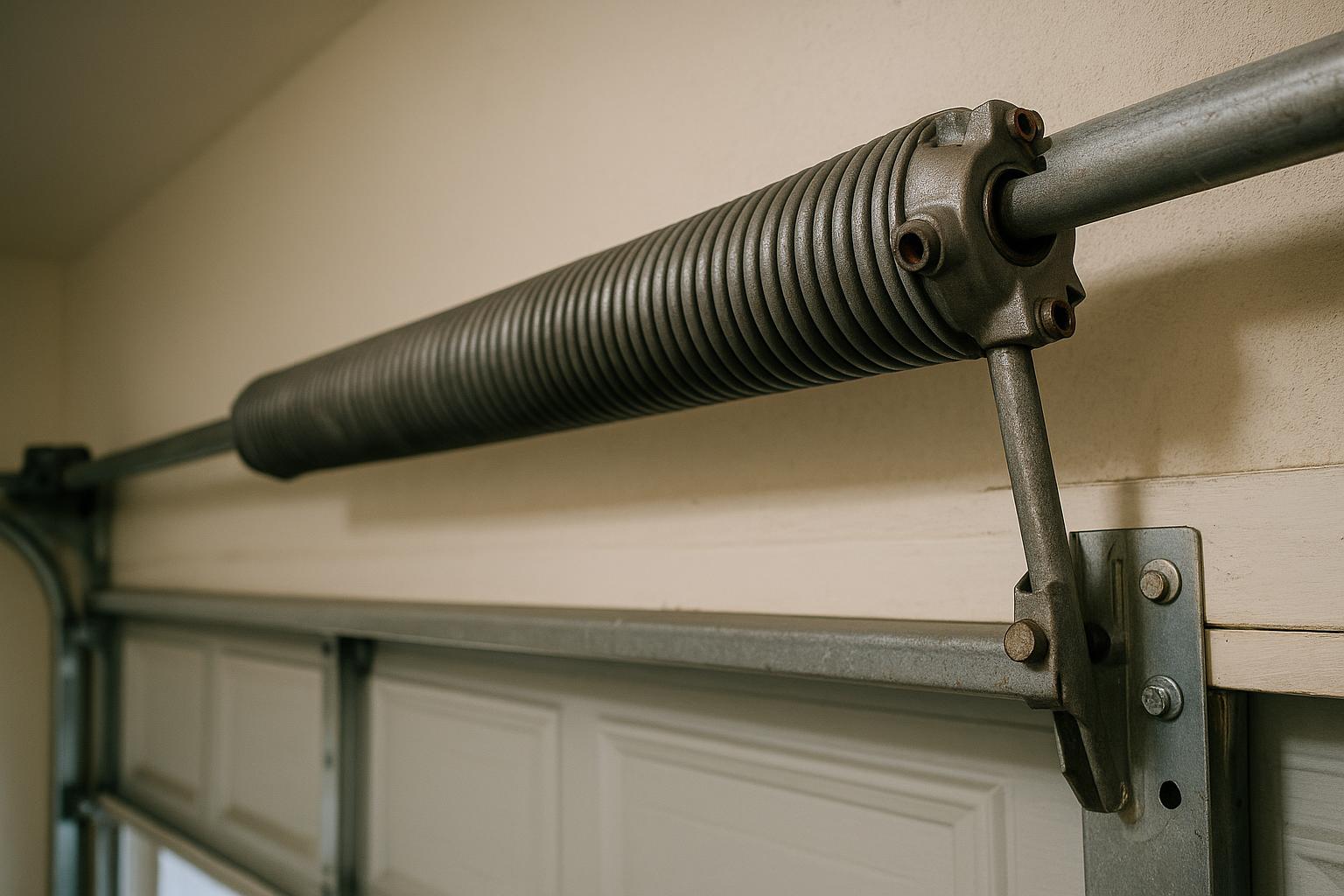
Your Garage Door Springs Are Doing More Work Than You Think
Most homeowners in Fishers don't think about their garage door springs until something goes wrong. And when something goes wrong with a spring, it tends to go wrong in a dramatic way — a loud bang, a door that won't open, or worse, a door that crashes down unexpectedly.
Your garage door springs are the unsung heroes of the entire system. They bear the full weight of the door — which can range from 130 to over 400 pounds depending on the material and size — and they cycle up and down thousands of times over their lifespan. Eventually, every spring wears out. The question is whether you catch the warning signs early or deal with a full failure at the worst possible time.
Here's how to tell if your garage door springs are on their way out, what to do about it, and why this is one repair you should never attempt on your own.
How Garage Door Springs Work
Before diving into the warning signs, it helps to understand the two main types of garage door springs:
- Torsion springs are mounted on a metal shaft above the garage door opening. They use torque to lift the door and are the more common type found on modern residential doors in the Fishers area.
- Extension springs run along the horizontal tracks on either side of the door. They stretch and contract to assist with lifting. These are more common on older installations.
Both types are under extreme tension. That tension is what makes them effective — and what makes them dangerous when they fail or when someone without proper training tries to adjust them.
Warning Signs Your Springs Are Wearing Out
1. Your Door Feels Heavier Than Usual
Try this simple test: disconnect your garage door opener by pulling the emergency release handle, then manually lift the door about halfway. A properly balanced door with healthy springs should stay in place on its own. If it feels unusually heavy, slides back down, or is difficult to lift, your springs are losing tension and may be close to failure.
2. The Door Opens Unevenly or Crooked
If one side of your garage door rises faster than the other, it could mean one of your springs is weaker than the other or has already broken. This is especially common with extension spring systems where each side operates somewhat independently. An uneven door puts extra strain on the opener, the tracks, and the remaining spring, which can lead to a cascade of additional problems.
3. You Hear Loud Squeaking or Grinding
Some noise during operation is normal, but excessive squeaking, popping, or grinding sounds coming from the area above the door can indicate that your torsion springs are corroding or losing their elasticity. While lubrication can sometimes help, persistent noise is often a sign that the metal is fatigued.
4. There Are Visible Gaps in the Spring Coils
Take a look at your torsion spring when the door is closed. A healthy spring has tightly wound coils with uniform spacing. If you notice a visible gap — a section where the coils have separated — the spring has already broken. Even if the door still operates with a broken spring (sometimes the opener can muscle through it), you're putting enormous stress on the opener motor and risking a complete failure.
5. The Door Slams Shut Instead of Closing Smoothly
When springs are functioning properly, they control the speed and weight of the door throughout its full range of motion. If your door drops quickly during the last foot or two of closing, the springs aren't providing adequate counterbalance anymore. This is both a safety hazard and a sign that replacement is overdue.
6. Your Opener Is Struggling
Garage door openers are designed to work with the springs, not instead of them. If your opener strains, hesitates, or stops mid-cycle, it may not be an opener problem at all. Worn springs force the motor to work harder, which shortens the opener's lifespan and can burn out the motor entirely. Many homeowners in Fishers call us thinking they need a new opener when the real culprit is a failing spring.
How Long Do Garage Door Springs Last?
Most standard garage door springs are rated for approximately 10,000 cycles. One cycle equals one full open and one full close. If you use your garage door four times a day, that works out to roughly seven years of use. High-cycle springs rated for 25,000 or even 50,000 cycles are available and can be a smart investment, especially for families who use the garage as their primary entrance.
Factors that can shorten spring life include:
- Lack of regular lubrication
- Rust and corrosion from humidity or moisture
- Extreme temperature swings common here in central Indiana
- Improper spring size or installation
Why You Should Never Replace Springs Yourself
We understand the DIY spirit — and there are plenty of garage door maintenance tasks homeowners can safely handle, like lubricating moving parts or tightening hardware. Spring replacement is not one of them.
Torsion springs are wound under tremendous force. A spring that releases unexpectedly can cause serious injury or even death. Professional technicians use specialized tools — winding bars, clamps, and calibrated equipment — and have the training to handle the tension safely. This is one job where the risk simply isn't worth the savings.
When our team at Fishers Door & Opener replaces springs, we also inspect the entire system — cables, drums, bearings, and tracks — to make sure everything is in good working order. A spring failure often reveals or causes secondary issues that need attention.
Should You Replace One Spring or Both?
If your door uses two torsion springs and one breaks, we almost always recommend replacing both at the same time. Here's why: the springs were installed together and have experienced the same number of cycles. If one has failed, the other is statistically close behind. Replacing both at once saves you from paying for a second service call in a few weeks or months, and it ensures your door is balanced properly with matched springs.
What to Do If You Suspect a Spring Problem
If you've noticed any of the warning signs listed above, here's what we recommend:
- Stop using the door if it's visibly damaged, making unusual sounds, or operating erratically.
- Do not attempt to manually force a door open or closed if a spring has broken.
- Call a professional for an inspection. A trained technician can assess the condition of your springs and recommend the right solution.
At Fishers Door & Opener, we provide honest assessments and upfront pricing. If your springs have life left in them, we'll tell you. If they need replacing, we'll explain your options — including high-cycle upgrades — so you can make an informed decision.
Keep Your Garage Door Safe and Reliable
Your garage door is the largest moving component of your home and one of the most frequently used entry points. Keeping the springs in good condition isn't just about convenience — it's about safety for your family and protection for your vehicles and belongings.
If you're in Fishers, Noblesville, Carmel, or any of the surrounding communities and you think your garage door springs might be wearing out, don't wait for a dramatic failure. Give us a call and let us take a look. We show up when we say we will, and we'll make sure your door is operating the way it should.