
Your Garage Door Shouldn't Sound Like That
You press the button, and instead of a smooth, quiet operation, your garage door groans, squeals, or rattles its way up the track. Maybe you've gotten used to it. Maybe your neighbors haven't. Either way, a noisy garage door isn't just an annoyance — it's often a warning sign that something needs attention before it turns into a bigger, more expensive problem.
If you're a homeowner in Fishers and your garage door has started making unusual sounds, this guide will help you decode what you're hearing and figure out what to do about it.
Grinding or Scraping Sounds
A grinding or scraping noise is one of the more concerning sounds your garage door can make. It usually points to one of a few issues:
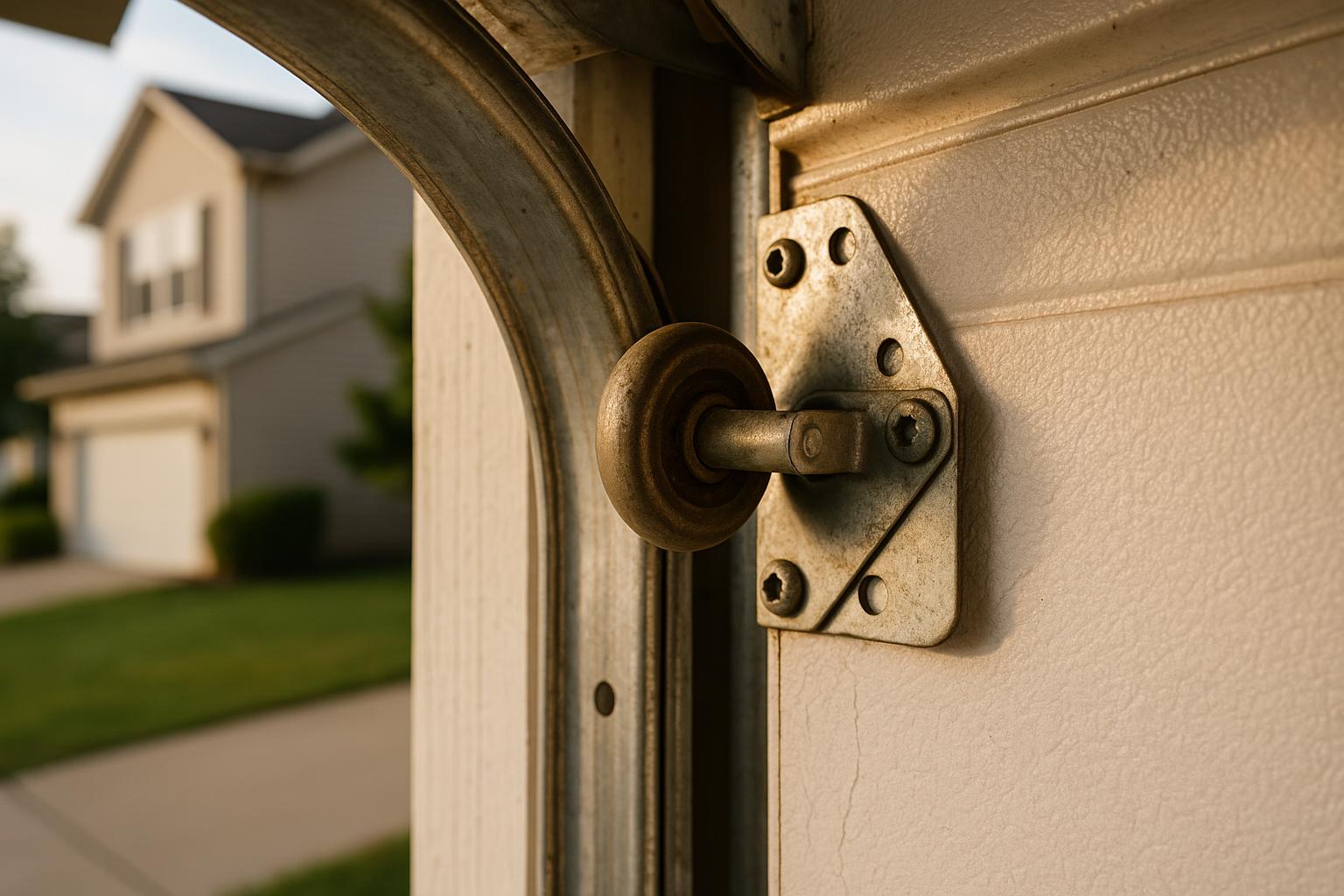
- Worn or misaligned rollers: Metal rollers wear down over time, and when they do, they create a harsh grinding sound as they move through the track. Nylon rollers are quieter and longer-lasting, and upgrading to them is one of the most effective ways to reduce garage door noise.
- Track misalignment: If the tracks that guide your door have shifted even slightly, the door can scrape against them as it moves. This creates friction, noise, and uneven wear that can eventually cause the door to get stuck or come off the track entirely.
- Opener gear issues: If the grinding seems to come from the opener unit itself rather than the door, the internal gears may be stripping. This is especially common in older chain-drive openers that have been running for a decade or more.
Grinding noises rarely go away on their own. If anything, they tend to get worse. Having a technician inspect the rollers, tracks, and opener can prevent a minor issue from turning into a door that won't open at all.
Squealing or Squeaking
High-pitched squealing or squeaking is one of the most common garage door complaints we hear from Fishers homeowners. The good news is that it's often one of the easier problems to address.
- Lack of lubrication: Garage door components — including hinges, rollers, springs, and bearings — need periodic lubrication to operate smoothly. Over time, lubricant dries out, and metal-on-metal contact creates that unmistakable squeal.
- Worn hinges: The hinges that connect your door panels can wear out, especially at the pivot points. When the holes in the hinges become elongated from years of use, the door starts to bind and squeak.
- Torsion spring friction: Your torsion springs coil and uncoil every time the door moves. Without proper lubrication, they can produce a creaking or squealing sound under tension.
A good-quality garage door lubricant — not WD-40, which is a solvent, not a lubricant — applied to the springs, hinges, rollers, and bearing plates can often eliminate squeaking entirely. We recommend lubricating these parts every six months as part of basic garage door maintenance.
Rattling or Vibrating
If your garage door sounds like it's shaking apart, the culprit is usually something loose.
- Loose hardware: The nuts, bolts, and screws that hold your garage door system together can loosen over time due to the constant vibration of daily operation. A simple tightening of the hardware can make a surprising difference.
- Loose chain or belt: If you have a chain-drive opener, a loose chain will slap against the rail and create a rattling noise. Belt-drive openers can also develop slack over time, though they tend to be quieter overall.
- Worn support brackets: The brackets that hold the tracks to the wall and ceiling can loosen, allowing the entire track to vibrate during operation.
While tightening a few bolts is something many homeowners can handle, be cautious about adjusting anything connected to the springs or cables. Those components are under extreme tension and can cause serious injury if handled improperly.
Banging or Popping
A loud bang or pop when your garage door operates is harder to ignore — and for good reason.
- Broken torsion spring: A sudden, loud bang — especially when the door isn't in use — is the classic sign of a torsion spring snapping. If this happens, do not try to operate the door. A broken spring means the door is essentially dead weight and can be dangerous to move manually.
- Panel or section issues: Popping sounds during operation can indicate that a panel is warped, cracked, or not seated properly. As the door moves, the damaged section flexes and creates a popping noise.
- Opener strain: If the opener is working harder than it should — because of a balance issue, worn springs, or track problems — it can produce banging or clunking sounds as it struggles to lift or lower the door.
When Noise Means It's Time for an Upgrade
Sometimes a noisy garage door isn't just a maintenance issue — it's a sign that the system is reaching the end of its useful life. If your garage door is 15 to 20 years old and the noises keep coming back despite repairs and lubrication, it may be more cost-effective to invest in a new door or opener rather than continuing to patch an aging system.
Modern garage doors and openers are significantly quieter than models from even ten years ago. Belt-drive openers, insulated steel doors, and nylon rollers can transform your garage from the loudest room in the house to one of the quietest. For Fishers families with bedrooms above or adjacent to the garage, that difference is hard to overstate.
Don't Ignore What Your Garage Door Is Telling You
Every noise your garage door makes is a clue. Some clues point to a simple fix like lubrication or tightening a bolt. Others point to worn-out parts that need replacing before they fail completely. And a few — like the unmistakable bang of a broken spring — demand immediate professional attention.
At Fishers Door & Opener, we help homeowners across Fishers, Noblesville, Carmel, and the surrounding communities diagnose and fix noisy garage doors every day. Whether it's a quick tune-up or a full system replacement, we'll give you an honest assessment and get your door running the way it should — quietly.
If your garage door has been making sounds that don't seem right, don't wait for the problem to get worse. Give us a call and let's figure out what it's trying to tell you.