
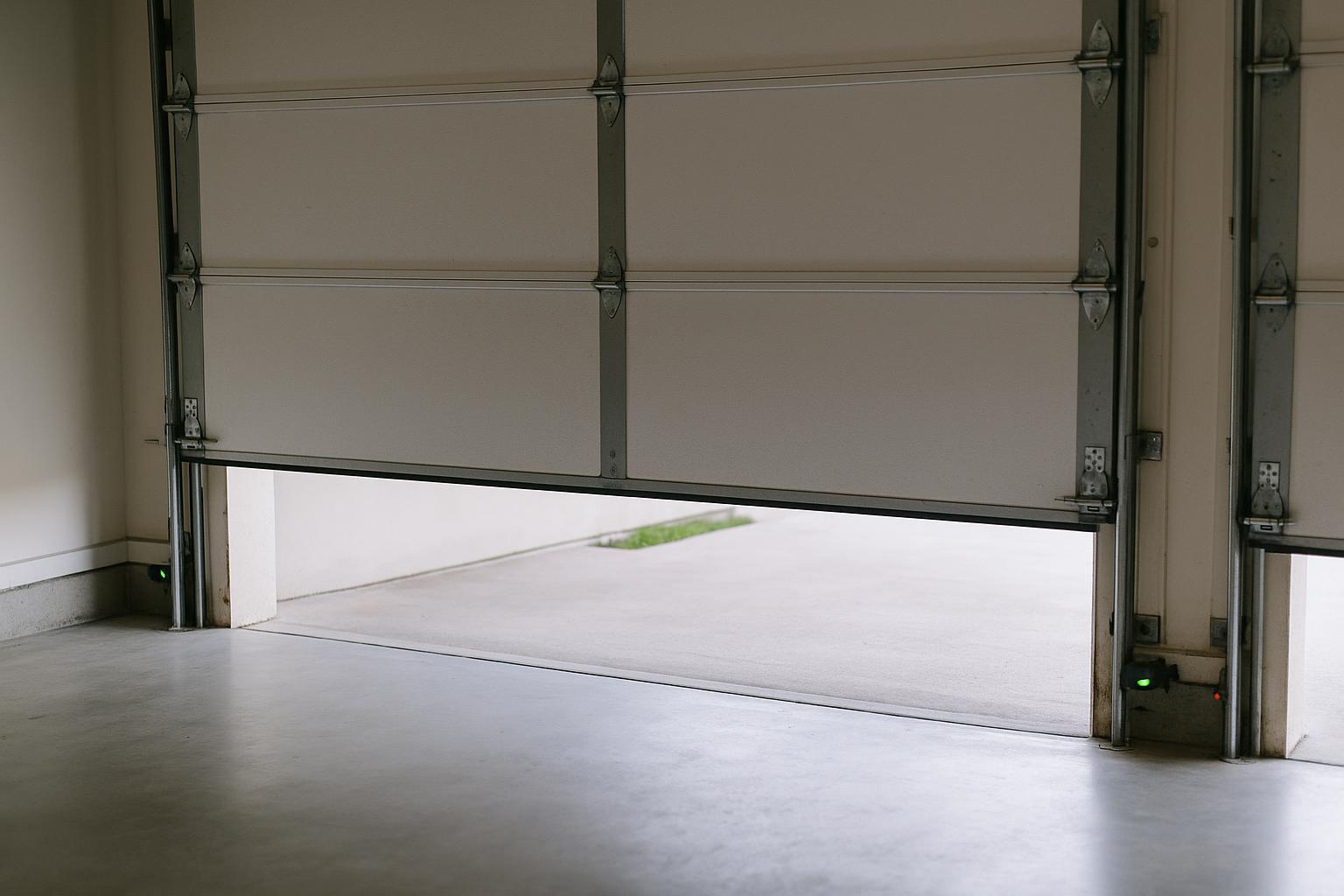
That Frustrating Moment When Your Garage Door Won't Stay Closed
You press the button on your remote, the garage door starts its descent, and then — just before it reaches the floor — it stops and reverses right back up. You try again. Same thing. Maybe it works on the third try, maybe it doesn't. Either way, you're standing in your driveway in Fishers wondering what just happened.
This is one of the most common garage door problems we see, and the good news is that it's usually fixable without replacing the entire door. The bad news is that ignoring it can lead to bigger issues down the road, including a door that stops working entirely or one that becomes a safety hazard for your family.
Let's walk through the most likely causes and what you can do about each one.
1. Misaligned or Dirty Safety Sensors
This is the number one reason garage doors reverse before closing, and it's often the easiest to fix. Every garage door opener manufactured after 1993 is required to have photo-eye safety sensors — those small devices mounted near the bottom of the door tracks on either side.
These sensors send an invisible beam across the opening. If anything breaks that beam — a child, a pet, a trash can, or even a cobweb — the door is designed to reverse immediately. It's a critical safety feature, but it can also be triggered by problems with the sensors themselves.
Common sensor issues include:
- Dirty lenses: Dust, dirt, and spider webs can block the beam. A quick wipe with a soft cloth often solves the problem.
- Misalignment: If one sensor gets bumped — maybe by a bike or a lawnmower — the beam no longer connects. Check whether both sensor lights are solid. A blinking light usually means they're out of alignment.
- Sun interference: Direct afternoon sunlight can overwhelm the sensor's receiver, especially during summer months here in central Indiana. A small shade or cardboard tube over the sensor can help.
- Damaged wiring: Over time, the thin wires running from the sensors to the opener can fray, get pinched, or be chewed by rodents.
If you've cleaned and realigned the sensors and the problem persists, the sensors themselves may need to be replaced.
2. The Close-Limit Switch Needs Adjustment
Your garage door opener has settings called limit switches that tell it how far the door should travel in both directions — up and down. If the close-limit switch is set incorrectly, the opener thinks the door has hit an obstruction before it actually reaches the floor, and it reverses as a safety precaution.
This is especially common after a new opener installation or when seasons change. Temperature swings in Fishers — from humid summers to freezing winters — can cause metal tracks and hardware to expand and contract slightly, which can throw off these settings over time.
Most openers have adjustment screws or digital controls that let you fine-tune the travel distance. Your owner's manual will have specific instructions, but if you're not comfortable making the adjustment yourself, it's a quick fix for a technician.
3. Worn or Broken Springs
Garage door springs do the heavy lifting — literally. They counterbalance the weight of the door so the opener doesn't have to do all the work. When springs wear out or break, the door becomes significantly heavier than the opener expects.
In some cases, the opener's force settings interpret this extra resistance as an obstruction and trigger a reversal. You might also notice the door moving more slowly than usual, the opener straining, or the door falling quickly when you disconnect the opener and try to operate it manually.
Important: Garage door springs are under extreme tension and can cause serious injury if handled incorrectly. Spring replacement is not a DIY job. If you suspect your springs are the issue, call a professional.
4. Track Problems
The metal tracks that guide your garage door need to be properly aligned and free of obstructions. Bent tracks, debris in the track, or rollers that have come out of the track can all create resistance that triggers the opener's auto-reverse feature.
Take a close look at your tracks from inside the garage. They should be straight, parallel, and free of dents or buildup. The rollers should move smoothly without catching or grinding. If you see visible damage to the tracks, that's something a garage door technician should address — forcing a door through bent tracks can cause much more expensive damage.
5. Opener Force Settings
Every garage door opener has adjustable force settings that control how much effort it applies to open and close the door. If the closing force is set too low, the opener may interpret normal friction as resistance and reverse.
This can happen gradually as components age. Rollers get stiff, hinges tighten up, and weatherstripping creates more drag. The door that closed perfectly two years ago now needs a little more force to complete its travel.
You can usually adjust the force settings with a screwdriver on older openers or through a digital menu on newer models. Increase the closing force in small increments and test after each adjustment. Be careful not to set it too high — the auto-reverse feature exists to protect people and property, and you don't want to override that safety margin.
6. Damaged Weatherstripping or Bottom Seal
The rubber seal along the bottom of your garage door can become stiff, warped, or detached over time. When this happens, it can catch on the concrete floor and create just enough resistance to trigger a reversal. This is more common during cold weather when rubber hardens.
Inspect the bottom seal for cracks, tears, or sections that are pulling away from the door. Replacement weatherstripping is relatively inexpensive and can also help with energy efficiency — keeping cold drafts and moisture out of your garage during Indiana winters.
When to Call a Professional
Some of these fixes are straightforward enough for a handy homeowner — cleaning sensors, checking for obstructions, or adjusting force settings. But others, like spring replacement, track repair, or diagnosing electrical issues with the opener, are best left to experienced technicians.
If you've tried the basic troubleshooting steps and your garage door is still reversing, or if you're noticing multiple symptoms at once, it's time to have someone take a look. Continuing to force the door to operate when something is wrong can damage the opener motor, strip gears, or create a safety risk.
Keeping Your Garage Door Reliable in Every Season
Living in Fishers means your garage door deals with a wide range of conditions throughout the year — heat, humidity, ice, and everything in between. Regular maintenance goes a long way toward preventing issues like unexpected reversals. A yearly inspection that includes lubricating moving parts, checking sensor alignment, tightening hardware, and testing the safety features can save you from inconvenient breakdowns.
At Fishers Door & Opener, we help homeowners across Fishers, Noblesville, Carmel, and the surrounding area keep their garage doors working safely and reliably. If your door is giving you trouble, we'll diagnose the problem honestly and fix it right — no upselling, no surprises. Give us a call and we'll get it sorted out.